
Sources for Rocky Hill Previous Residents
The Rocky Hill era table separates current parcel sources from historical occupant clues. Rocky Hill’s research has strong local and regional leads, but no confirmed complete town-only criss-cross series. The missing volume should be named as a gap, not replaced with an unsupported year or a generic people list.
| Source | Years it covers | Where held | What it shows |
|---|---|---|---|
| Assessor card and GIS | Current portal cycle | Rocky Hill Assessor | Parcel, MBL, unique ID, displayed owner, assessment and sales fields |
| Town Clerk deed index | Online start year not shown | Town Clerk and SearchIQS | Grantor, grantee, instrument, recording date, legal description, map clues |
| Hartford telephone reel | 1930-1933 | Library of Congress | Regional locality index and dated printed listings |
| New Britain telephone reels | 1958-1960/61; 1964/65-1966/67 | Library of Congress | Rocky Hill and West Rocky Hill locality leads |
| Sanborn Rocky Hill | 1950 | Library of Congress, with Yale fallback | Ten-sheet building, street, and use context |
| Vertical files and obituaries | Vertical files 1939-present; obituary dates vary | State Library and RHHS | Historical names, dates, places, family or organization clues |
Use the table as a chain of evidence. The current parcel identifies where to begin. The deed moves the legal chain backward. A dated directory, obituary, map, or archive item adds a household or building clue only when its source and year fit.
Start a Rocky Hill Previous Residents Trail
The assessor portal accepts a street number and exact street dropdown, unit, owner name, MBL, unique identifier, and condominium complex. Record the displayed street, number, unit, MBL, unique ID, property use, acreage, zone, buildings, complex, assessment date, and sales fields if the question needs them. The portal displayed records updated 08/20/2026 and a 2023 revaluation note, so those values need a date badge.
Use the Rocky Hill Online Property Maps route to orient the parcel. Find accepts owner last name, street number and name, or a map-lot-unit parcel ID. The map is for assessment purposes and is not a legal survey. A recorded plan or deed legal description controls when the map and address appear to disagree.
For a Rocky Hill address, the parcel is the bridge, not the answer. It gives the next search a stable key even if the street line has an extension, condo unit, or historical variant.
Follow Rocky Hill Previous Residents Through Grantors
Move from the current Rocky Hill card to the Rocky Hill Land Records page and SearchIQS. Search the displayed current owner or grantee and the parcel or street. Record the instrument type, recording date, book and page or instrument number, grantor, grantee, legal description, map reference, and mortgage or release links. If the public view shows only an index, call it an index entry.
Repeat the search using the prior grantor. A Rocky Hill chain can run current deed, prior deed, estate or probate, earlier deed, and subdivision map. Gaps can come from name changes, trusts, LLCs, multiple parcels, unrecorded occupancy, or an older book outside the online range. SearchIQS’s start year was not displayed in the unattended inspection.
- Save the current parcel key and the exact legal address string.
- Find the latest available instrument and separate grantor from grantee.
- Search the prior grantor, then compare map lot, unit, and legal description.
- Use probate, maps, or archive sources when an estate or older address explains a break.
- Ask the Town Clerk for a narrow copy or counter search when the online image is gated.
The Town’s copy fee is $1 per page, with $2 for certification. Maps and subdivision maps have different fees. Ask for an estimate before requesting a long chain.
- Grantor
- The party conveying or assigning an interest in an instrument.
- Grantee
- The party receiving an interest in that instrument.
- Chain of title
- A sequence of recorded interests used to trace a parcel backward through instruments.
- Legal description
- The deed’s land description, which controls over a casual street label for the instrument.
Rocky Hill Estate Transfers by District
Rocky Hill probate can explain a deed change that looks like an address break. Newington Probate District PD-07 covers current Rocky Hill, Newington, and Wethersfield matters. The lookup has case type, district, status, last name, and first name fields, with results from January 5, 2011 forward and incomplete older data. For previous residents, that case trail can explain an estate-related transfer without turning a name into an occupancy claim.
The State Library Town Guide places Rocky Hill’s historical probate route in Hartford District through January 7, 1975, and Newington District from January 8, 1975. If a prior owner died before the online period, ask the Newington clerk or State Library for the appropriate file path. Keep only the case or date needed to explain a property chain. Do not publish beneficiary, asset, or family details.
A death certificate, obituary, probate case, and deed transfer answer different questions. A chain is stronger when it states which source supports which step.
Rocky Hill Previous Residents on Sanborn Maps
The Library of Congress catalog identifies a 1950 Rocky Hill, Hartford County, Connecticut Sanborn set with 10 sheets. Sanborn sheets can show building footprints, streets, construction or fire details, adjacent lots, and uses. They usually identify a business or building use more readily than a private occupant. The direct image route intermittently returned 502 during research, so the catalog and a later image capture remain the safe record.
For Rocky Hill, the official Sanborn catalog item is the starting point, with Yale map collections as an authoritative fallback. Compare a sheet with the current assessor building and property-use fields, but label the result as “building or use context” unless the sources directly support a stronger statement.
A map can show that a structure or road existed at a point in time. It cannot tell who occupied it without a separate dated source.
Rocky Hill Previous Residents in Listings
The Rocky Hill telephone trail begins with the Library of Congress Hartford reel, which covers July 1930 through July 1933 and includes Rocky Hill in its locality index. New Britain reels cover 1958 through 1960/61 and 1964/65 through 1966/67, with Rocky Hill and West Rocky Hill entries. Search the locality index first, then the alphabetical name and address pages. A telephone listing is evidence that a name and line were printed in that year.
Save the reel, date, page, exact printed name, street, number, telephone, and business or occupation note if present. Pair the listing with a deed date, obituary, newspaper, census, or RHHS item. A missing name can mean a move, omission, missing volume, or different coverage. It does not establish a death or a current absence.
The Rocky Hill city directory collection guide describes the regional reels and local-history fallback in more detail. The backward-address page should use those sources, not pretend a complete criss-cross run was found.
Previous Residents in Rocky Hill Records
Rocky Hill owners are only one layer of a previous-resident search. Historical directories, telephone books, newspapers, obituaries, cemetery entries, and local-history files may identify a household or occupant for a dated period. Keep an owner entry, occupant clue, and directory listing in separate columns. A previous residents record may sit in one source while the same person is absent from the others.
Lawful house history. Use the address trail for family history, preservation, genealogy, and personal curiosity. Do not use a previous-residents search to watch, harass, or contact a living person. Omit unnecessary current addresses, full phone numbers, and vulnerable-family details.
RHHS’s obituary collection may provide names, relatives, occupations, organizations, and dates for historical research. The State Library vertical files can add biography and newspaper clippings. Verify a key identity with a vital, cemetery, probate, or deed source before writing a conclusion.
The Rocky Hill Historical Society obituary route is a historical endpoint, not a current resident directory.
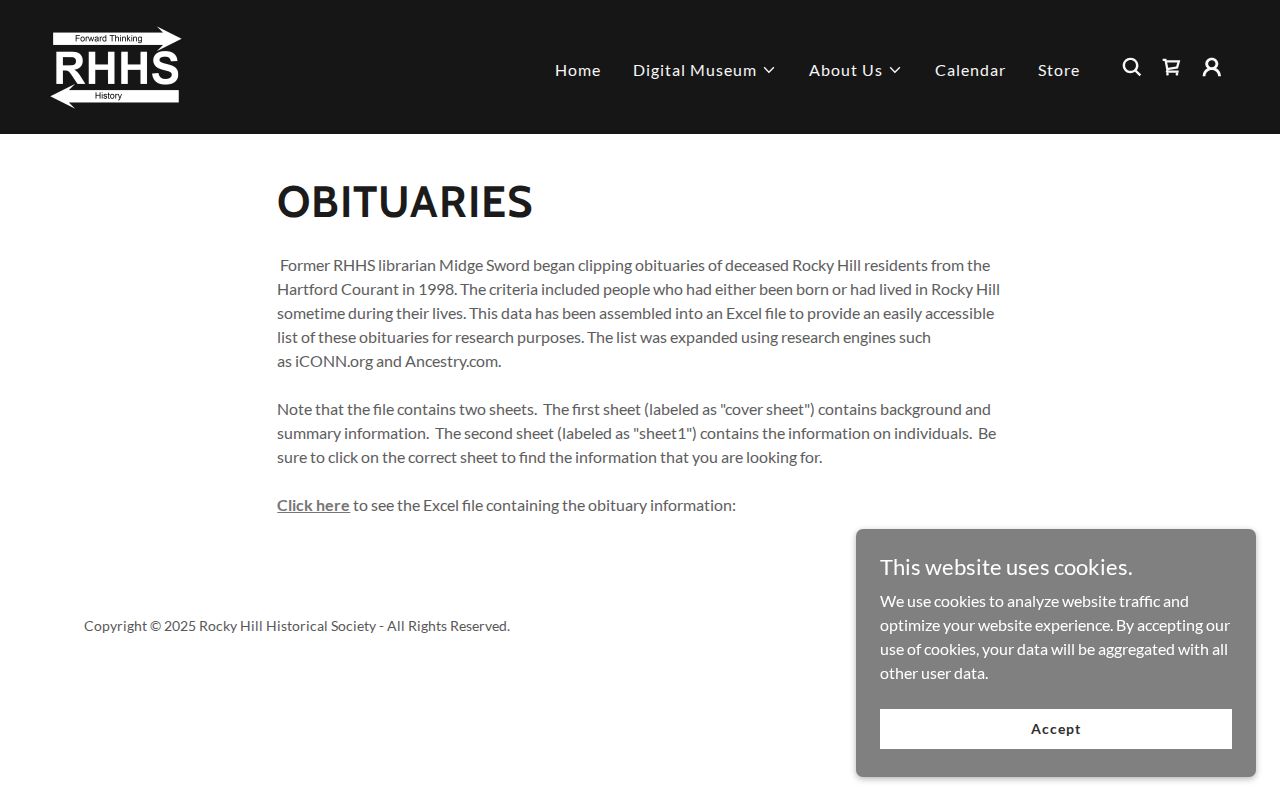
The obituary collection can close an older identity chain when its date and provenance are kept beside the parcel record.
Rocky Hill Directory Records Before 1843
For a house or family that reaches before May 1843, search Wethersfield and Stepney Parish as well as Rocky Hill. Rocky Hill’s predecessor jurisdiction can explain why an early deed, vital entry, church record, or probate file does not use the later town name. Previous residents research may therefore need the Connecticut State Library and Wethersfield Historical Society as documented fallback leads.
Do not infer a street rename from the jurisdiction change. Preserve the old address wording, compare the legal description and map, and ask the Town Clerk, Assessor, Planning and Zoning, Highway Department, State Library, or RHHS about any road-name record. The research found no official street-renumbering chronology.
Rocky Hill Previous Residents Request
A Rocky Hill written request works best when it names the address and the record layer. The local history route includes RHHS, the Town Historian, Cora J. Belden Library, State Library, State Archives, Wethersfield Historical Society, and Library of Congress scans. The LOC map folder covers Rocky Hill and Sharon over an approximately 1640-1970 span, but not every item is digitally viewable.
| Field to carry forward | Why it matters |
|---|---|
| Original and modern address | Preserves historical wording while showing the current search line. |
| Parcel, MBL, or unique ID | Bridges card, GIS, and deed systems. |
| Earliest and latest date | Defines the period instead of requesting an unbounded file. |
| Source page or image | Allows another researcher to repeat the observation. |
| Confidence and unresolved names | Keeps a clue from becoming an unsupported conclusion. |
The Connecticut State Library vertical files are documented as biography, obituary, family, town, and newspaper-clipping sources from 1939 forward. Ask for a narrow surname, street, or year search.
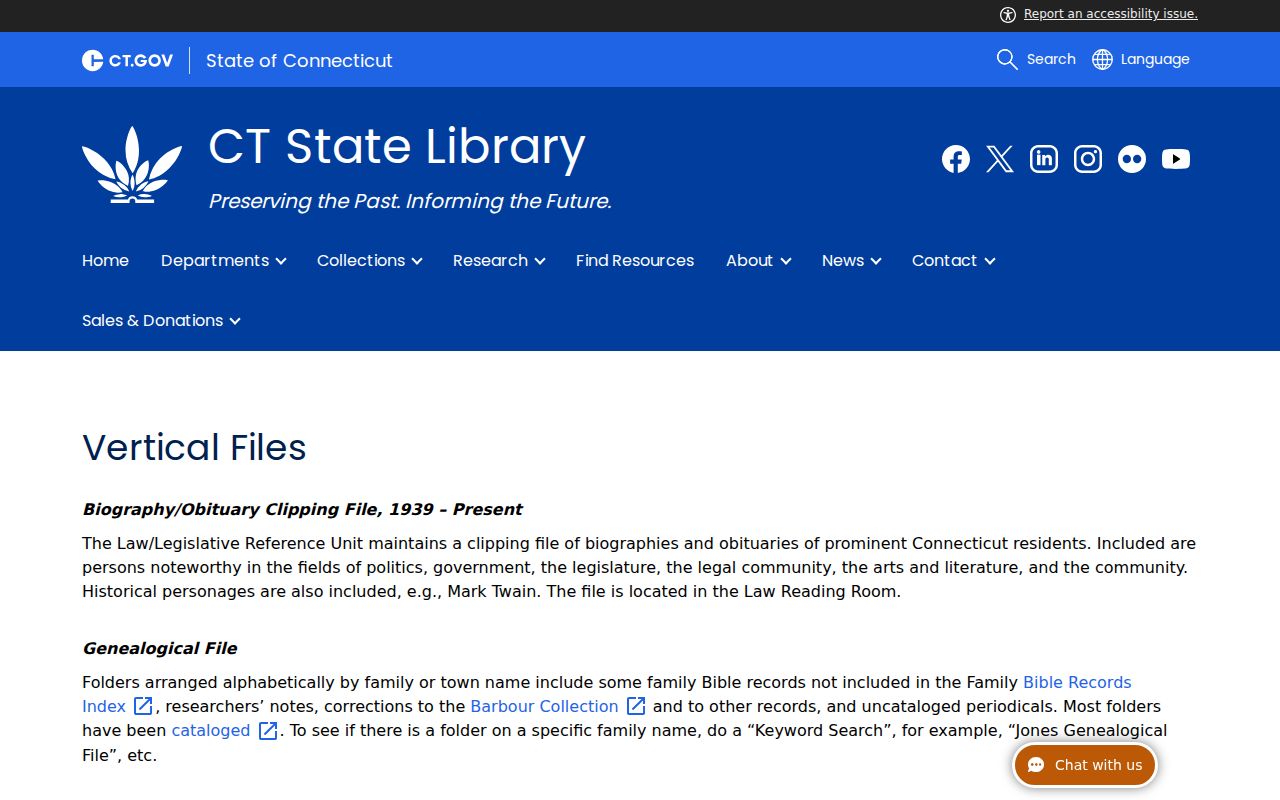
The vertical-file route is valuable because it records the archive fallback when a modern deed index or local directory is incomplete.
Rocky Hill Previous Residents Limits
A Rocky Hill previous-residents search can document a deed party, a historical listing, a building, or an obituary at a dated point. It cannot prove that every occupant was named, that an owner lived there, that a past address is current, or that a living relative shares the same place. SearchIQS coverage, the exact criss-cross run, and the town’s street-change chronology remain research gaps.
Use the Town Clerk for a legal instrument, the Assessor for card fields, a surveyor for boundaries, the State Library or RHHS for older sources, and the probate or vital custodian for an official event record. If a source is blocked, label the gap and give the lawful fallback. A careful history is more useful than a complete-looking but unsupported chain.
Note: The end of an online chain is a request point, not proof that the parcel or household history ends there.