
Rocky Hill City Directory Collections
A collection table is the safest starting point because the research did not locate a complete Rocky Hill-only Polk or city-directory run with confirmed years. What is documented is a mix of local-history holdings, state research guidance, and regional telephone reels. “Regional” matters. A locality index can show that Rocky Hill was covered while still leaving the extent of household entries to be checked page by page.
| Collection or lead | Years | Where held | Access and limit |
|---|---|---|---|
| Hartford regional telephone reel | July 1930-July 1933 | Library of Congress | Rocky Hill appears in the locality index; inspect the printed entry and page. |
| New Britain regional telephone reel | 1958-1960/61 | Library of Congress | Rocky Hill and West Rocky Hill are listed; regional coverage is not a complete town roster. |
| Later New Britain reel | 1964/65-1966/67 | Library of Congress | Rocky Hill locality entries are a dated lead for telephone listings. |
| Ethel Miner Cooke Research Library | Not published as one directory run | Rocky Hill Historical Society | Scans, diaries, timelines, searchable histories, books, and holdings list; ask about access. |
| State Library history and genealogy guide | Varies by record set | Connecticut State Library | Indexes and digitized sources exist, but not everything is online; in-person help is advised. |
| Rocky Hill-only city-directory series | Not confirmed | Research gap | Ask RHHS, Cora J. Belden Library, State Library, and archives before assuming a year run. |
The collection coverage is therefore strongest when a researcher treats each item as a dated source. The title, reel, locality index, page, and image link belong in the research log.
Rocky Hill Before the City Directory
Record location changed over time. Rocky Hill was part of Wethersfield and Stepney Parish until incorporation in May 1843. The Connecticut State Library’s Towns and Counties page and Rocky Hill Town Guide are the jurisdiction anchors. A person who lived in the area before incorporation may be cataloged under Wethersfield rather than Rocky Hill, even when a later family story uses the Rocky Hill name.
Search the Rocky Hill Historical Society research route, then check Wethersfield Historical Society and the State Library for predecessor records. The Connecticut River, early port, farming, shipbuilding, trade, and the ferry described as beginning in 1655 provide fixed place context. They help compare an old entry with a road or institution without identifying a modern household.
A city directory clue is stronger when the jurisdiction and date agree. Do not force a pre-1843 name into a Rocky Hill-only series that the sources do not document.
Rocky Hill’s 1843 Records Break
May 1843 is more than a history date. It is a search instruction. Post-incorporation town records can use Rocky Hill as the local jurisdiction. Earlier land, vital, church, and probate references may sit in Wethersfield or a predecessor collection. The State Library Town Guide lists Rocky Hill births, marriages, and deaths from 1843-1915, Barbour coverage from 1843-1854, State Archives material around 1845-1905, and Congregational records reaching earlier years.
For a family-history city directory search, write “before 1843” or “after 1843” beside the query. That one note prevents a false conclusion when a name disappears from a Rocky Hill search. The change in town records also explains why the Historical Society’s research guide points outward to Wethersfield sources.
The Rocky Hill Town Historian page is a useful context source for the town’s events and people, but it is not a public person-lookup service.
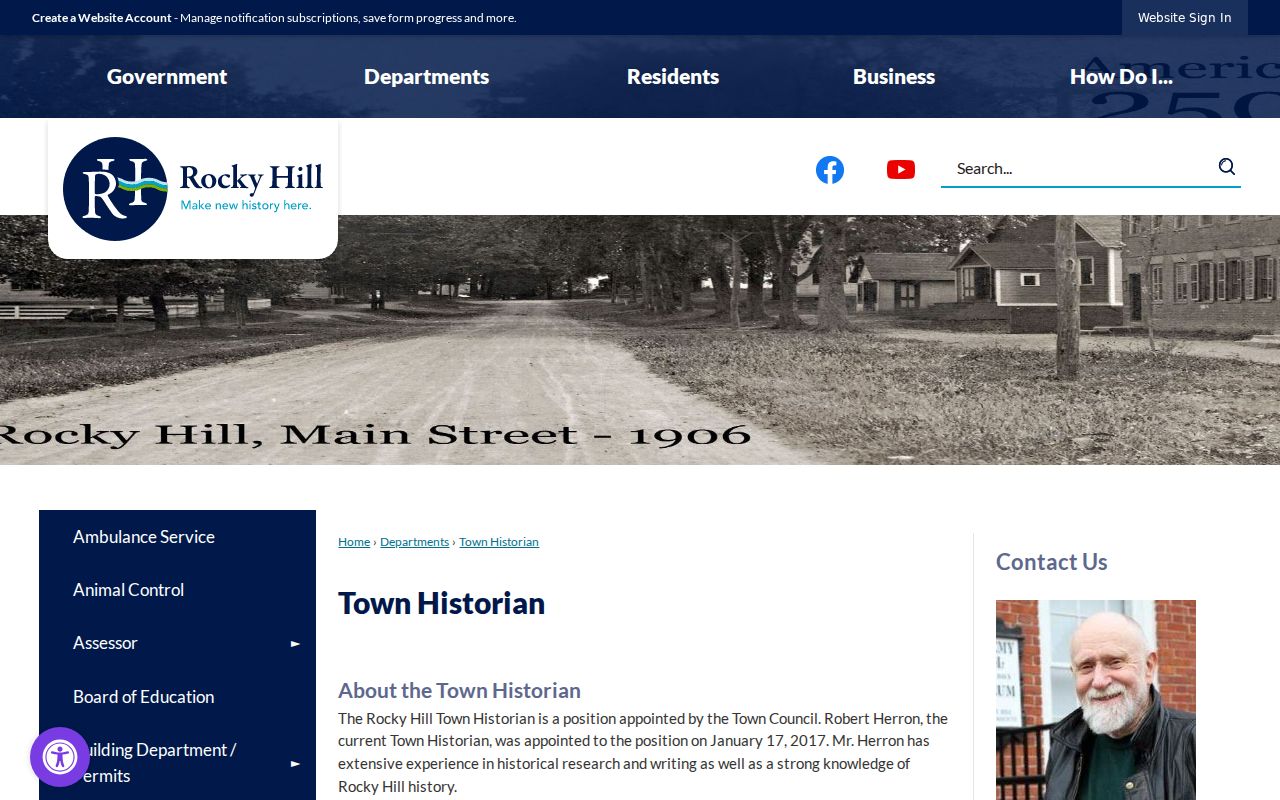
The historian image marks the local-history handoff that can explain a directory clue without replacing the original volume.
Note: A town boundary change can move a record without moving the family, so jurisdiction is part of the name-match test.
Rocky Hill City Directory Library
The Cora J. Belden Library is the most visible local library contact for a city directory question. The town directory lists the library at 33 Church Street, with information desk 860-258-7623 and director 860-258-7621. Posted hours show Monday through Wednesday 10-8, Thursday and Friday 10-5, and Saturday 10-1 on one page, while another result showed Saturday 10-5. Treat Saturday as a timely conflict and confirm before a visit.
The older official library page returned 404 during the research check, and an active page documenting a full local-history or city-directory catalog was not located. That does not mean no material exists. It means the request should name the person, approximate year, street, and directory type, then ask staff whether a local history room, microform, scan, or referral is available.
The official library contact page is the best current route for hours and staff details.
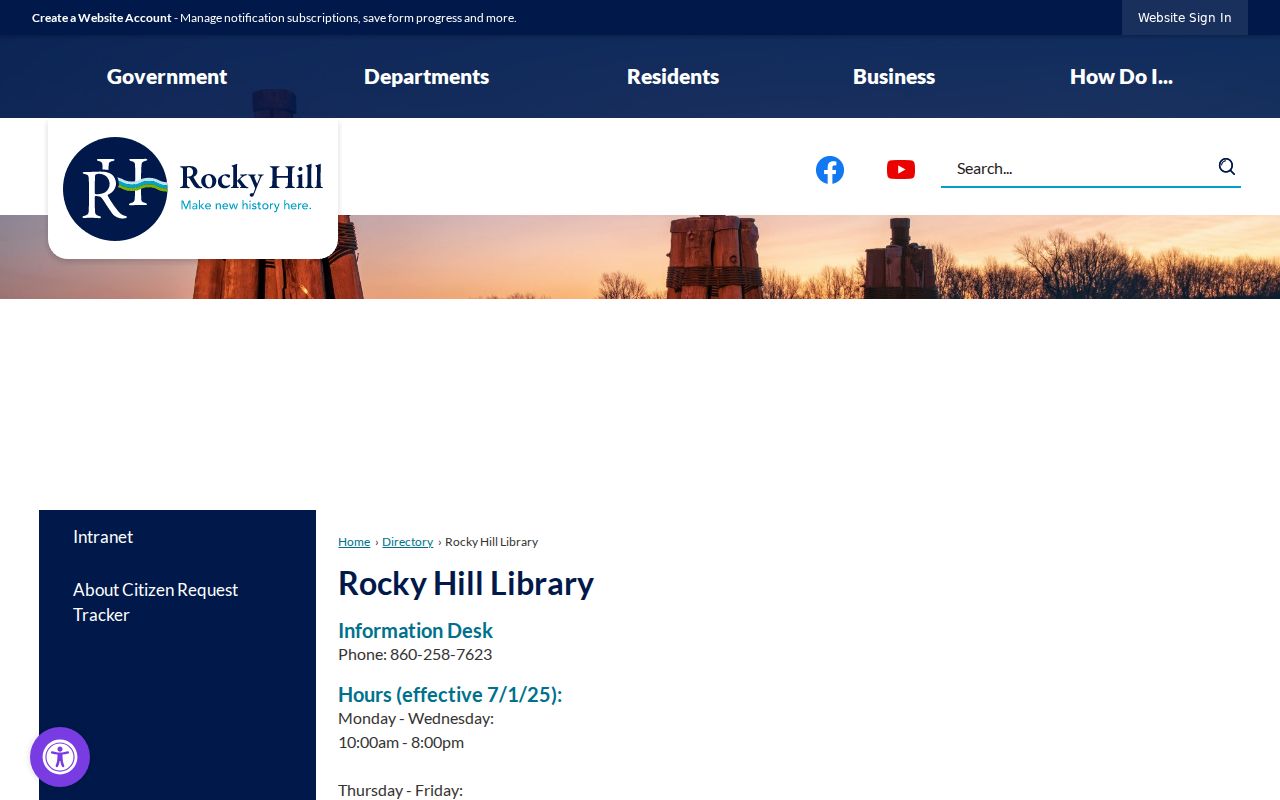
The library image belongs to the access step. It does not prove that a particular directory volume is on the shelf today.
Rocky Hill Directory Research at RHHS
RHHS operates Academy Hall Museum and a volunteer research collection at 785 Old Main Street. The society lists access on Saturdays from March through December, 12:30-3:00, or by appointment, with phone 860-563-6704. The research guide points to the Search Collection, objects, photographs, library catalogs, oral histories, local books, the Town Historian, Academy Hall, and the Ethel Miner Cooke Research Library.
The library page names scanned papers, diaries, timelines, searchable histories, cemetery material, local books, Rocky Hill parks, and holdings. Those items may be better for a house or family question than a generic directory query. Ask for the source title and date, and keep a note if a scan is a newspaper, diary, map, photograph, or directory. They do not all carry the same evidence.
The Ethel Miner Cooke Research Library page is the direct holdings route.
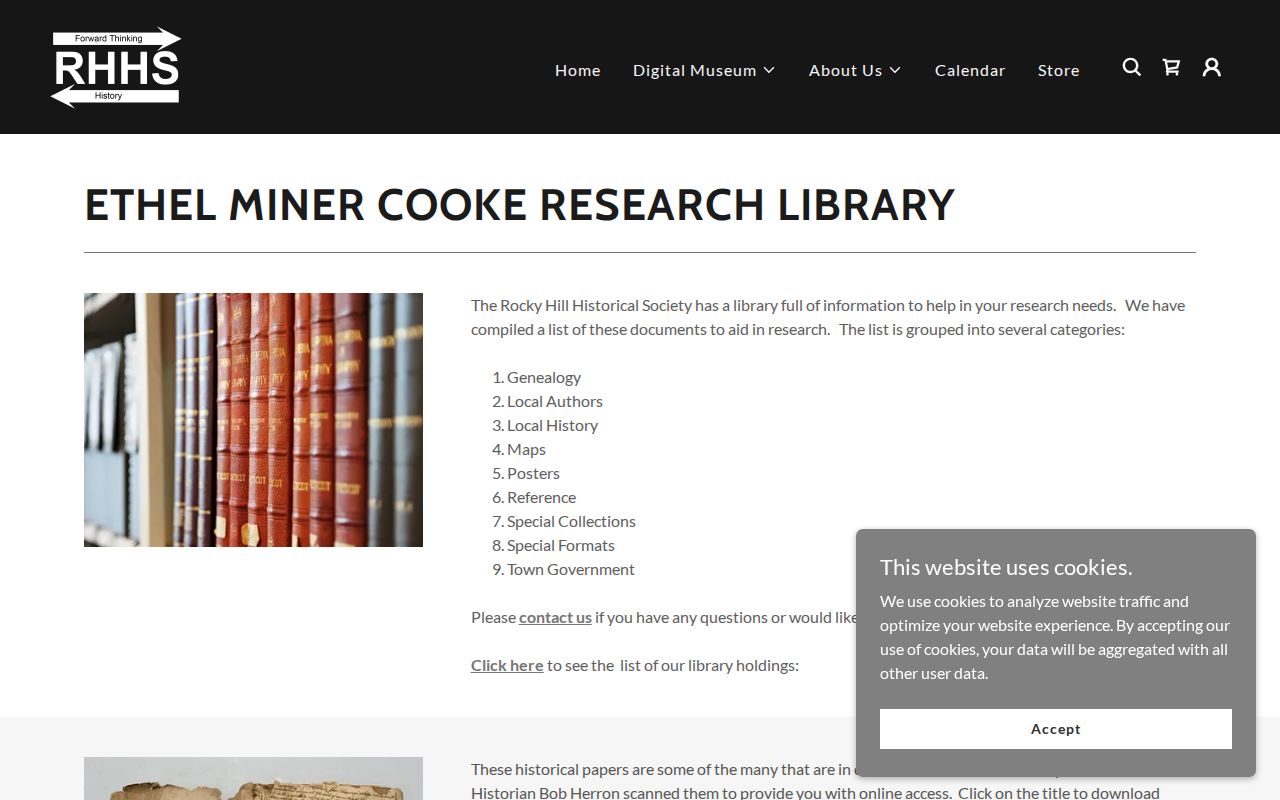
Local scans add texture to a historical directory search, but each item still needs its own title, date, and page or collection label.
Reading a Rocky Hill City Directory Entry
A historical city directory entry should be read as a compact snapshot. The useful fields are the name as printed, street and address, telephone if present, occupation or business descriptor if present, volume or year, page, and the source image. A printed owner or household mark can be helpful in a volume that uses one, but the Rocky Hill research did not verify that convention for a specific local run.
| Entry field | Question it can answer |
|---|---|
| Name as printed | Which spelling and initials did the publication use? |
| Street and number | Where did the listing place the person in that year? |
| Telephone | Was a number printed, and was it residential or business? |
| Occupation or business | What descriptor did the directory attach to the entry? |
| Volume, page, image | Can another researcher repeat the exact observation? |
- Criss-cross directory
- An address-first index that can point from a street to a listed name when the collection includes one.
- Householder index
- A name or household entry used to find a person or address in a particular publication.
- Abbreviation key
- The publisher’s explanation of short forms for occupations, relationships, or address notes.
- Locality index
- A regional directory page showing towns or exchanges included, not proof that every household appears.
Read the page image before summarizing. A directory entry may be an advertisement, a business listing, or a map reference rather than a household record.
Regional Telephone Directories for Rocky Hill
The Library of Congress Hartford reel for July 1930-July 1933 places Rocky Hill in its locality index. The New Britain reel for 1958 through 1960/61 explicitly includes Rocky Hill and West Rocky Hill, and a later reel covers 1964/65 through 1966/67. These are the clearest digitized city-directory-style leads found in the research.
Use the Hartford reel or the New Britain reel to inspect the index and then the printed pages. The research did not retain a personal sample record, and the reels are regional. A locality label alone cannot establish a complete Rocky Hill street run.
When a result matters, save the reel identifier, page number, printed line, and access date. Pair it with a dated deed, obituary, newspaper, or local-history source before using it to trace a household.
The Connecticut State Library History and Genealogy guide supplies the broader research route for census and directory material.
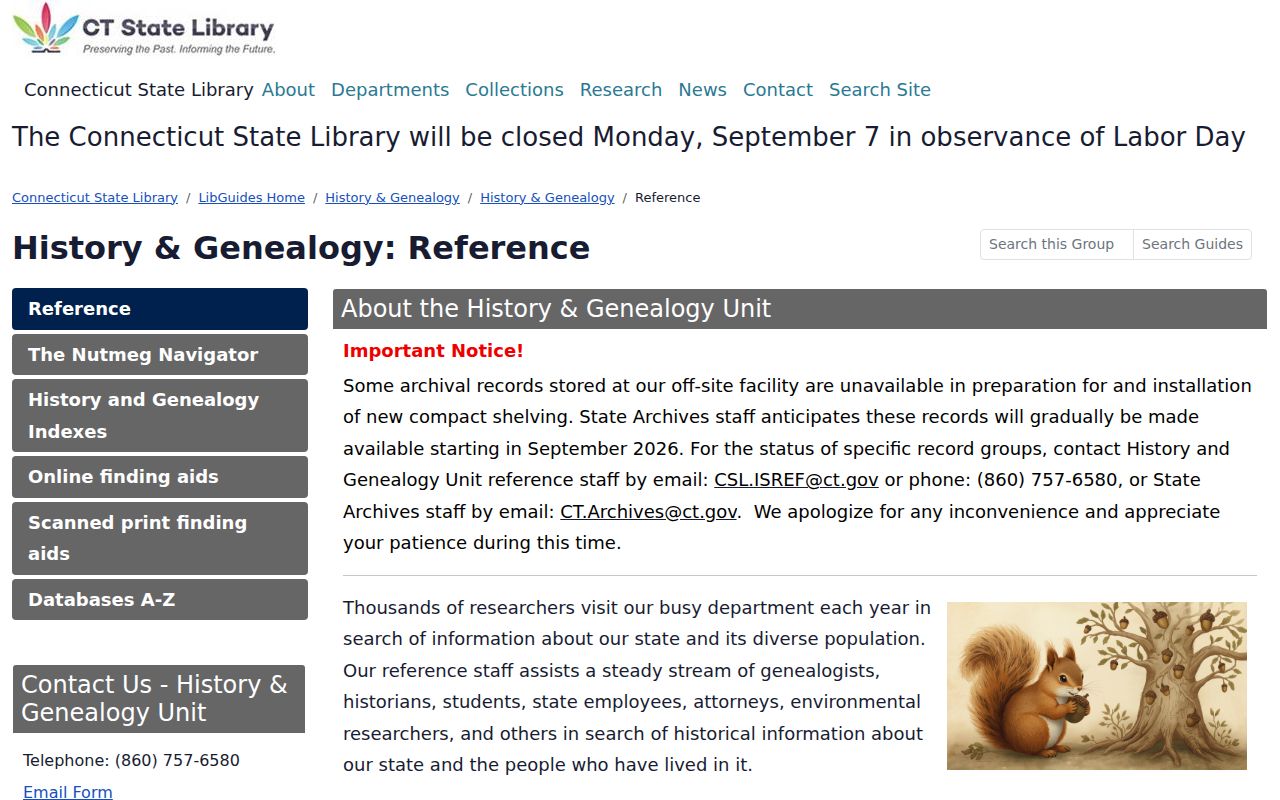
The state research guide helps place a regional reel alongside census, directory, and archive options.
Tracing Rocky Hill Directory Households
A household trail needs several dated points. Begin with the earliest reliable directory entry, then move forward while recording every street change, initial, telephone, occupation, and nearby fixed place. Pair directory years with census years when possible. A gap can mean a move, death, omission, a missing volume, or a change in the publication’s coverage. Do not choose one explanation from absence alone.
- Write the name exactly as printed and note initials, occupation, street, and page.
- Check the next available year and compare the street, telephone exchange, and household names.
- Use a census, deed, obituary, cemetery entry, or RHHS file to test the identity.
- For a pre-1843 clue, repeat the search under Wethersfield or Stepney Parish.
- Mark the last dated listing as historical and keep current parcel or voter research separate.
A printed address can be a strong clue for a family-history question. It is not permission to publish a living person’s current location.
Rocky Hill Directory Cross-Checks
When a directory trail ends, a cemetery or obituary can help close a historical identity chain. The State Library Town Guide names Rocky Hill, Rose Hill Memorial Park, and Bulkley cemeteries. Center Cemetery is town-owned and has a searchable database and wayfinding route. An obituary can add age, occupation, relatives, or a place, but those details should be used to test a historical match, not to build a current family profile.
Probate supplies a separate chronology. Newington Probate District PD-07 covers current Rocky Hill work, while older files follow the historical district split. A probate case can explain why a parcel moved, but case details and family information may be restricted. Ask for the case or instrument needed, not an unbounded estate file.
Center Cemetery’s official page and its linked search route are the appropriate starting points for a burial or plot question.
What Rocky Hill Directory Research Cannot Confirm
No exact Rocky Hill-only city-directory series, complete active library catalog, or official criss-cross volume was located in this research. The gap is a reason to ask RHHS, Cora J. Belden Library, the State Library, State Archives, or Wethersfield Historical Society for a targeted search. It is not a reason to substitute a generic commercial result or invent coverage years.
A directory can confirm that a name was printed in a particular year and place. It cannot by itself confirm a present address, household membership, ownership, registration, or consent. Current questions should move to the Town Clerk, Assessor, Registrar, or relevant state custodian. Historical questions should retain the source’s date and evidence type.
The Connecticut State Library History and Genealogy guide explains the archive and in-person research route. A strong city directory note ends with what was found, what was not located, and which office can answer the next question.
The RHHS research guide is the direct local fallback when a Search Collection item needs a title, date, or access check.
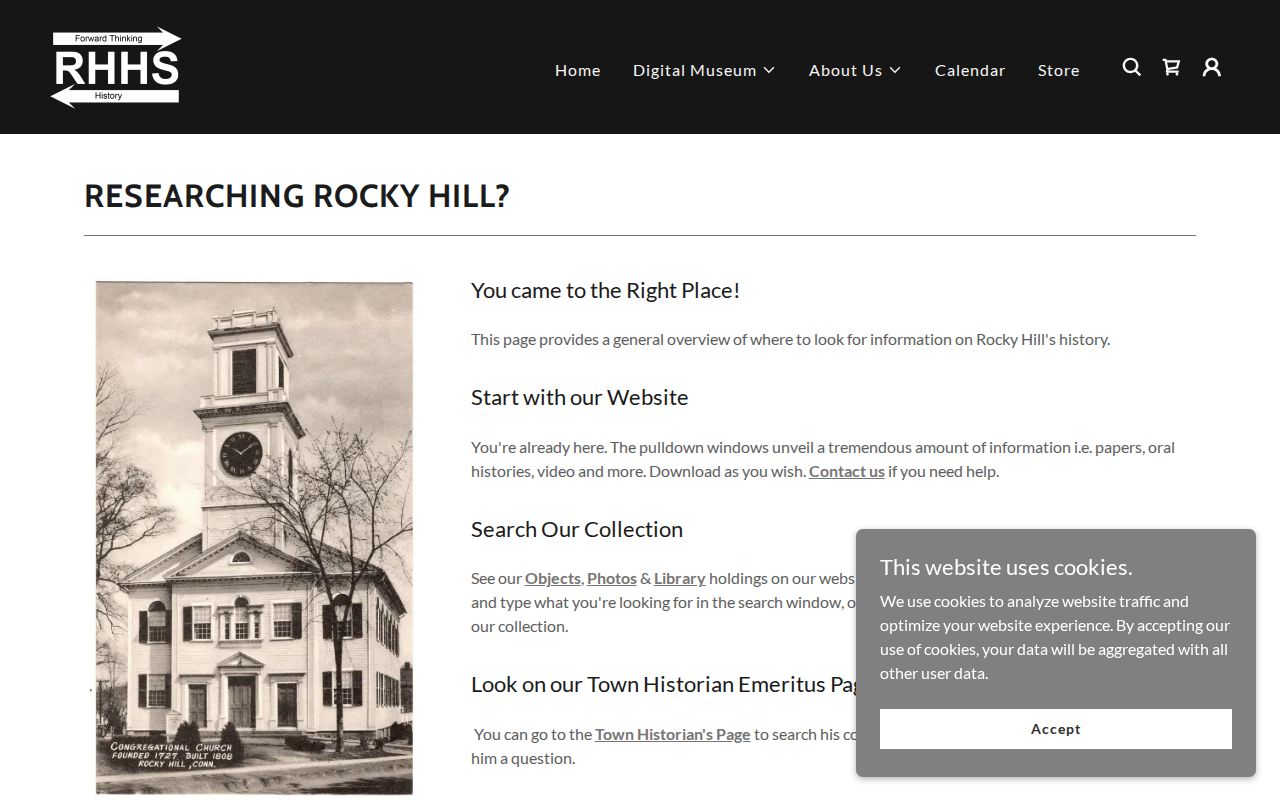
The Search Collection is a practical fallback because it gives a researcher a named local route when a neat town-only directory run is not documented.